CH Precision
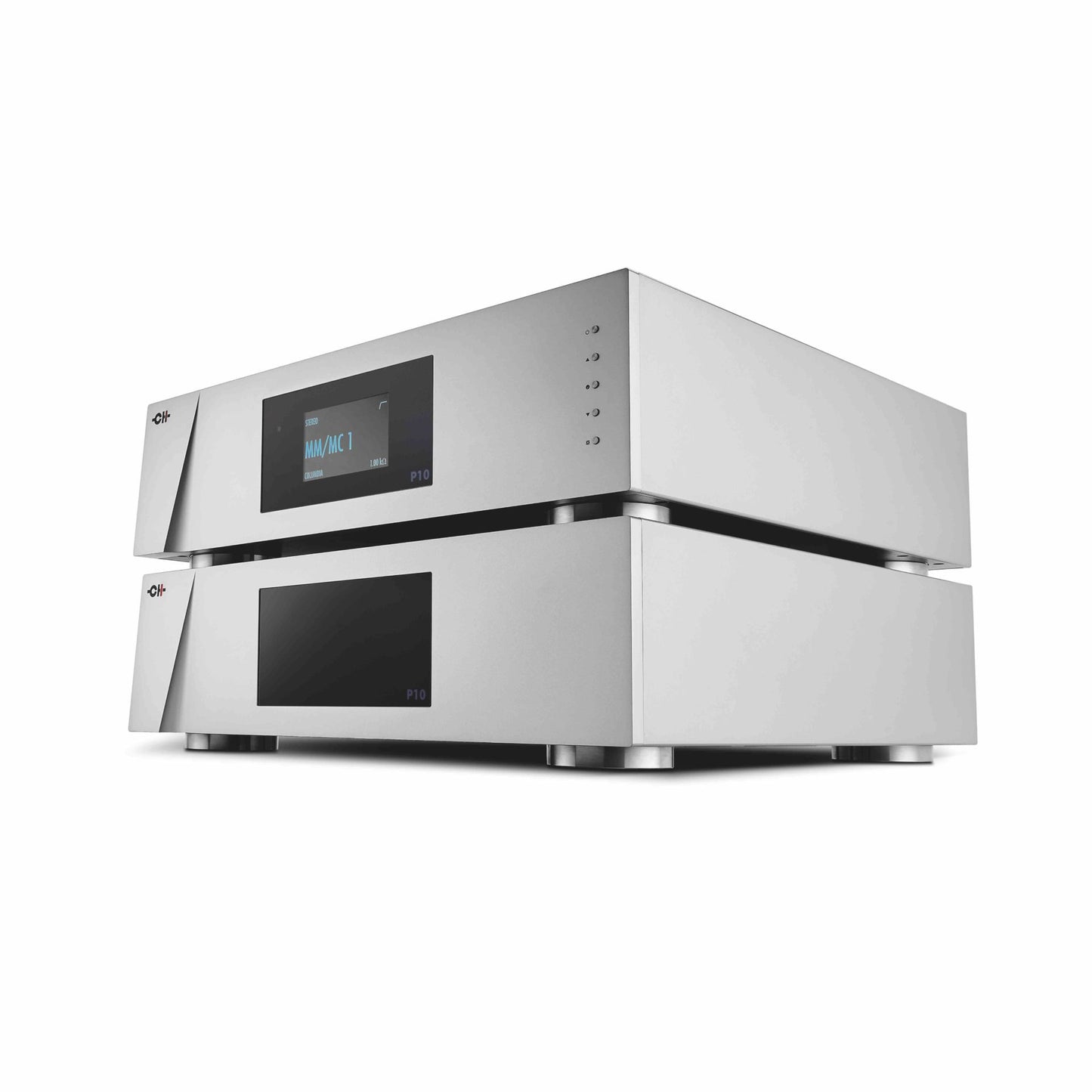
P10 Dual Monaural Two Chassis Phono Stage
$123,900.00
Free shipping in Canada
Authorized dealer
Quantity
Free shippingAnywhere in Canada
Top-rated storeSince 1984
Authorized dealerCanadian CH Precision dealer
Full warrantyManufacturer backed
What customers say about us
4.8
★★★★★
200+ reviews · 100k+ customers since 1984
★★★★★
“Upgrading my system reminded me why I love great sound in the first place. The new setup delivers incredible sound with effortless ease, and it’s c...”
Verified customer, Canada · May 2026
★★★★★
“I’m passionate about building my system, and while I value Hi-Fi Centre’s expertise, I’m especially pleased with my turntable, which has been a tru...”
Verified customer, Canada · Feb 2026
★★★★★
“Building my system piece by piece has completely changed how I experience music and movies. Whether it’s hearing a soundtrack in theaters and wanti...”
Casey Gorton, Canada · May 2026
★★★★★
“Awesome Cambridge Audio Gear and Speedy Service”
Rob · Aug 2024
★★★★★
“Better Than Promised Delivery and Flawless Purchase”
Dev A · May 2025
★★★★★
“Wanting smaller speakers, I turned to Hi-Fi Centre and found a perfect match with B&W, combining compact design and impressive sound that keeps me ...”
Randolph Decker, Vancouver, British Columbia, Canada · Jul 2025
★★★★★
“Brilliant SVS Recommendation and Seamless Service”
Gord L · May 2025
★★★★★
“I inherited a large vinyl collection from my father, but putting together the right system felt overwhelming until I received expert guidance. Now ...”
Verified customer, Canada · Jun 2026
★★★★★
“After searching for the right speakers, Hi-Fi Centre helped me find a pair that finally delivered the full, balanced sound I’d been missing for years.”
Rick T, London, Ontario, Canada · Jul 2025
★★★★★
“Moving from hand-me-down components to my first serious audio system was a huge step, and the B&W 606 S2 speakers made it worthwhile from day one. ...”
John B., Canada · Jun 2026
★★★★★
“When I needed to replace my speakers, Hi-Fi Centre made it easy with great pricing and fast shipping, bringing my movies and music to life again.”
Mark Adkins, Ottawa, Ontario, Canada · Jul 2025
★★★★★
“After struggling with my system, Hi-Fi Centre’s guidance helped me find speakers that revealed incredible clarity and detail, letting me rediscover...”
Verified customer, Vancouver, British Columbia, Canada · Jul 2025
★★★★★
“What started with a Technics receiver and a curiosity about better sound eventually became a lifelong journey toward building my dream system. With...”
Tony A., Canada · May 2026
★★★★★
“As someone focused on building my system, I chose Hi-Fi Centre for wireless headphones that finally deliver true hi-fi sound without sacrificing co...”
Andrew Coates, British Columbia, Canada · Jul 2025
★★★★★
“Upgrading my speakers, DAC, CD player, and streamer completely transformed my system without needing an extreme budget. Now I can enjoy vinyl, CDs,...”
Verified customer, Canada · May 2026
★★★★★
“I started with entry-level gear and thought it sounded fine—until I experienced what a truly great system could do. Upgrading to B&W speakers and a...”
Verified customer, Canada · May 2026
★★★★★
“What I love most about my system is how naturally it blends into our home while delivering huge, immersive sound. The soundstage is incredible, the...”
Jeremy F., Canada · May 2026
★★★★★
“I’m passionate about building my system, and Hi-Fi Centre’s expertise helped me achieve a huge, immersive soundstage with B&W speakers and Transpar...”
Jeremy F, Canada · Feb 2026
★★★★★
“I was searching for a reliable hi-fi store and found exactly what I needed at Hi-Fi Centre. With my new B&W speakers, I’m spending more time enjoyi...”
Verified customer, Canada · May 2026
★★★★★
“After losing my system, I rebuilt it with Hi-Fi Centre’s help, creating a setup that delivers immersive detail and brings my music vividly to life.”
Caleb Bouey, British Columbia, Canada · Jul 2025
★★★★★
“I was just looking for an amp to pair with my new speakers, but once I added the AXR100, everything changed. My old CDs and records suddenly felt a...”
Terence Figueroa, Canada · Apr 2026
★★★★★
“As a DIY audio enthusiast, I enjoy building as much as I can myself, but Hi-Fi Centre has always been my source for the components that complete th...”
Verified customer, Canada · May 2026
★★★★★
“Clear Communication”
P. S. · Jan 2025
★★★★★
“I built my system piece by piece, and Hi-Fi Centre’s advice and fair pricing helped me achieve a clear, satisfying sound I can truly enjoy every day.”
Geoff C., St. Andrew · Feb 2026
★★★★★
“After years of using vintage and second-hand gear, stepping into higher-end audio with the Clearaudio Concept turntable completely changed my liste...”
Todd, Canada · May 2026
★★★★★
“With a strong system already in place, I chose Hi-Fi Centre for their selection, adding headphones that make everyday listening more convenient and...”
Verified customer, Richmond, British Columbia, Canada · Jul 2025
★★★★★
“After decades in the hobby, Hi-Fi Centre’s expert guidance helped me upgrade to exceptional systems that brought greater enjoyment, longer listenin...”
Verified customer, North Vancouver, British Columbia, Canada · Aug 2025
★★★★★
“As a long-time customer, I’ve relied on Hi-Fi Centre’s honest advice to build a system over the years that makes listening to music consistently en...”
Ron T, Surrey, British Columbia, Canada · Jul 2025
★★★★★
“Having trusted Hi-Fi Centre for decades, I’ve always felt at home with their team, building systems over the years that continue to deliver comfort...”
Verified customer, Canada · Feb 2026
★★★★★
“Early Delivery and a Great-Sounding Cartridge Upgrade”
Marc L · Aug 2023
★★★★★
“Easy Pre-Order and Smooth Pickup Experience”
Richard B · Jun 2025
★★★★★
“Frustrated with my previous streamer, I turned to Hi-Fi Centre and upgraded to an Eversolo unit that delivers better sound, easy setup, and a compl...”
Julien Spencer, Ontario, Canada · Jul 2025
★★★★★
“I’m passionate about building my system, and Hi-Fi Centre helped me upgrade with an Eversolo streamer that brought incredible clarity and made dail...”
Jaret Homenuk, Canada · Feb 2026
★★★★★
“After years away from the hobby, rebuilding my system piece by piece completely reignited my passion for music. The first time I heard everything c...”
Michael O., Canada · May 2026
★★★★★
“Excellent Service and a Great YouTube Channel”
Michael E · Aug 2025
★★★★★
“Exceptional Service and Expertise You Can Trust”
Derek S · Feb 2025
★★★★★
“Returning to Hi-Fi Centre, I expanded my system with their expert guidance, achieving a complete setup that elevated my listening experience and br...”
Roger R · Aug 2024
★★★★★
“Expert Guidance from Dennis and a Great System”
Paul N · Apr 2025
★★★★★
“Expert Help and a Perfect New System”
Ghost II · May 2025
★★★★★
“Fast, Competitive Service”
Trevor L · Jan 2025
★★★★★
“Fast Delivery That Beat Expectations”
George C · Mar 2025
★★★★★
“Fast, Free Shipping and Five-Star Service”
Brian F · Jul 2025
★★★★★
“Flawless Product and Personalized Service”
Sergey S · Jul 2025
★★★★★
“Flawless Remote Purchase and Shipping”
Brad S · Jul 2025
★★★★★
“I wanted a simple system, and Hi-Fi Centre helped me build a refined Focal setup that fits my space perfectly and brings real joy to my daily liste...”
Chris Short, Canada · Feb 2026
★★★★★
“As a long-time customer, I turned to Hi-Fi Centre to upgrade my headphones, and their expertise helped me find a comfortable, great-sounding pair p...”
Oliver W, Parksville, British Columbia, Canada · Aug 2025
★★★★★
“I wanted a simple system, and Hi-Fi Centre helped me build an incredible setup that transformed my listening experience and revealed music with dep...”
Verified customer, Kamloops, British Columbia, Canada · Jul 2025
★★★★★
“After years with my system, Hi-Fi Centre helped me transition to streaming with B&W and Marantz, delivering stunning clarity that makes every liste...”
Chuck Currie, Colwood, British Columbia, Canada · Jul 2025
★★★★★
“I started with a simple second-hand setup, but over the years, Hi-Fi Centre helped me grow my system step by step with thoughtful advice that match...”
Paul W, Canada · Apr 2026
★★★★★
“When it came time to upgrade my system, the GoldenEar Reference speakers made an immediate impact. Their sound quality has completely elevated my l...”
Verified customer, Canada · May 2026
★★★★★
“Buying my first serious headphones felt like a reward to myself, but it quickly became much more than that. The Grado SR325e opened my ears to deta...”
Verified customer, Canada · May 2026
★★★★★
“Music and audio have always been more than a hobby for me—they’ve been a lifelong passion. From evolving technology to discovering better sound, bu...”
raymond l., Canada · May 2026
★★★★★
“I wanted a simple system, and Hi-Fi Centre’s guidance helped transform my setup with Gryphon cables, unlocking greater clarity, depth, and a deeper...”
Verified customer, Canada · Feb 2026
★★★★★
“Happy Upgrade to the Aethos and Great Service”
Dean B · Feb 2025
★★★★★
“Hassle-Free Experience”
Anthony · Feb 2025
★★★★★
“As someone who is constantly refining and upgrading my audio setup, few products have left a lasting impression like the Sennheiser HD800S. Even al...”
Verified customer, Canada · Jun 2026
★★★★★
“Helpful Audiophiles and a Smooth Rega Purchase”
James M · Apr 2025
★★★★★
“Refining my system, Hi-Fi Centre’s advice helped me simplify my setup while achieving higher sound quality, making streaming music both effortless ...”
David G, British Columbia, Canada · Jul 2025
★★★★★
“Chasing the perfect sound, I found Hi-Fi Centre helped me complete my system with B&W 800 D3 speakers, transforming music into a powerful, immersiv...”
Patrick Guiney, Langford, British Columbia, Canada · Jul 2025
★★★★★
“For my cabin system, I wanted simplicity, and Hi-Fi Centre helped me choose KEF LS60 speakers that deliver immersive, effortless sound perfectly su...”
Jim Humphry, Vancouver, British Columbia, Canada · Jul 2025
★★★★★
“After years of compromising on sound quality, the KEF LSX II reminded me what I had been missing. These compact speakers transformed my bedroom int...”
James S., Canada · Jun 2026
★★★★★
“Upgrading from the speakers I inherited from my dad was a huge step, but the KEF Q11s completely transformed how I experience music. I’m now hearin...”
Evan Buday, Canada · May 2026
★★★★★
“I wanted a simple, modern upgrade, and Hi-Fi Centre’s guidance helped me build a great-sounding system that made me enjoy music more than ever.”
Ravi Pankhania, Richmond, British Columbia, Canada · Feb 2026
★★★★★
“I’m passionate about audio and found Hi-Fi Centre through the Yellow Pages; their expert advice and selection transformed my system with powerful, ...”
Mark Lane, Canada · Feb 2026
★★★★★
“After trying other shops without success, Hi-Fi Centre helped me put together a system that truly feels complete. It’s incredibly musical, easy to ...”
James V, Canada · Apr 2026
★★★★★
“Knowledgeable Staff and Fast Delivery”
Oliver W · Jun 2025
★★★★★
“Like-New Demo Speakers and Outstanding Packaging”
Jimmy M · Nov 2024
★★★★★
“I’ve been a passionate audiophile for decades, and Hi-Fi Centre’s expert guidance, trusted relationships, and exceptional products have helped me c...”
Paul M., Canada · Feb 2026
★★★★★
“Dennis’s knowledgeable, patient advice helped me make the right decisions over the years, and my system’s authenticity, presence, and ease of use n...”
Paul, Vancouver, British Columbia, Canada · Jul 2025
★★★★★
“Hi-Fi Centre always offers fair advice and honest opinion, with consistent good advice and quality gear that bring me closer to the music experienc...”
Jeff C., Canada · Feb 2026
★★★★★
“I value simple, high-quality sound, and Hi-Fi Centre’s patient, knowledgeable guidance helped me find the right upgrade, improving clarity, depth, ...”
Blair G, Delta, Britisla Columbia, Canada · Jul 2025
★★★★★
“What started as an addition to my TV setup eventually became a dedicated music system that completely transformed my living room. Now it’s a space ...”
Verified customer, Canada · May 2026
★★★★★
“After years away from the hobby while raising a family, getting back into high-end audio reminded me just how rewarding great sound can be. With th...”
Edwin L., Canada · May 2026
★★★★★
“I didn’t fully understand how much audio equipment could change the listening experience until I upgraded my system piece by piece over the years. ...”
Antonio F., Canada · May 2026
★★★★★
“Marantz 60n Delivered Power, Clarity, and Big Savings”
Mr. Smith · Jan 2025
★★★★★
“I wanted a simple, compact system, and Hi-Fi Centre delivered excellent sound with my Marantz Model M1 and B&W 705 S3, exceeding expectations.”
Arash S., Vancouver, British Columbia, Canada · Feb 2026
★★★★★
“I’m passionate about building my system, and Hi-Fi Centre’s expert advice helped me upgrade to a high-end setup with crystal clear sound and an imm...”
Thomas Braidwood, Canada · Feb 2026
★★★★★
“I started with a pretty average system, but once I upgraded, everything changed. Now I listen to music far more often and actually sit down to enjo...”
Stephen C, Canada · Apr 2026
★★★★★
“I wanted a simple, great-sounding system, and Hi-Fi Centre helped me find the perfect McIntosh amp and Sonus Faber speakers for daily vinyl listeni...”
Rick J., Canada · Feb 2026
★★★★★
“I’m passionate about building my system, and Hi-Fi Centre’s expertise helped me upgrade to McIntosh mono blocks, delivering the power and stunning ...”
Verified customer, Vancouver, British Columbia, Canada · Feb 2026
★★★★★
“After a frustrating experience elsewhere, I found exactly what I needed with help from Hi-Fi Centre. From the amp to the speakers and beyond, every...”
Blake, Canada · May 2026
★★★★★
“I started with a simple second-hand setup, but upgrading through Hi-Fi Centre completely transformed how I hear music. Now I catch details in album...”
Kevin B., Canada · May 2026
★★★★★
“Coming from an analog system, Hi-Fi Centre helped me transition into a stunning McIntosh tube setup, delivering incredible sound quality and that i...”
Lance F, Sorrento, British Columbia, Canada · Sep 2025
★★★★★
“Ordering online, I was impressed by Hi-Fi Centre’s fast shipping, clear communication, and honest product condition, making my purchase feel seamle...”
Boray N · Aug 2022
★★★★★
“I’m passionate about building my system, and Hi-Fi Centre helped me upgrade to a setup that looks great, sounds fantastic, and makes listening to m...”
Gordon Tanner, Canada · Feb 2026
★★★★★
“I’m passionate about building my system, and Hi-Fi Centre helped me upgrade to a reliable NAD amp with great sound, clean design, and modern featur...”
Spencer A., Canada · Feb 2026
★★★★★
“What started as an old surround setup turned into multiple systems that fit perfectly into every space in my home. With expert guidance, I now enjo...”
Verified customer, Canada · Apr 2026
★★★★★
“I started with a modest setup, but over time, with the help of Hi-Fi Centre, I built a system that delivers true reference-quality sound. From Naim...”
Ralph H, Canada · Apr 2026
★★★★★
“I started with a basic system, but over the years, Hi-Fi Centre helped me build something truly engaging. With my Naim setup, music is always playi...”
Verified customer, Canada · Apr 2026
★★★★★
“Coming from a basic system, Hi-Fi Centre helped me upgrade to a setup that brought clarity, depth, and a deeper connection to music I now enjoy eve...”
Anton Thomas, Burnaby, British Columbia, Canada · Jul 2025
★★★★★
“I’m passionate about building my system, and Hi-Fi Centre’s expert guidance over the years helped me create a truly satisfying setup that makes all...”
Verified customer, Canada · Feb 2026
★★★★★
“I wanted a simple upgrade, and Hi-Fi Centre made it easy with great pricing and a relaxed experience, helping me find speakers I’m truly proud to own.”
Verified customer, British Columbia/Squamish, Canada · Feb 2026
★★★★★
“Next-Level Service Worth Breaking My No-Review Rule”
Alex D · Jun 2025
★★★★★
“Outstanding Communication and On-Time Delivery Despite the Strike”
Daniel W · Jan 2025
★★★★★
“Professional Service That Stands Out in a Transactional World”
Matthew W · Jan 2025
★★★★★
“Prompt Answers and a Smooth Delivery”
Jeremy K · Aug 2025
★★★★★
“I was searching for great sound, and Hi-Fi Centre’s expert advice helped me find the right headphones, opening my eyes to how incredible music can ...”
Tyler C, British Columbia, Canada · Jul 2025
★★★★★
“Quick Online Order and Helpful Phone Support”
D'Arcy H · Jan 2025
★★★★★
“After years away from the hobby, getting back into vinyl reminded me why I fell in love with hi-fi in the first place. Sitting with my sons on Chri...”
Glenn Davies, Canada · May 2026
★★★★★
“After needing a replacement, Hi-Fi Centre helped me upgrade to a Rega setup that brought new life to my vinyl, making every listening session feel ...”
James MacKay, Qualicum Beach, British Columbia, Canada · Jul 2025
★★★★★
“Reviving a 1977 Rega Planar that belonged to my wife’s grandmother became a special project for our family. With the right parts from Hi-Fi Centre,...”
Sean C., Canada · May 2026
★★★★★
“I started with a basic setup, but upgrading through Hi-Fi Centre completely changed how I experience my collection. My records now sound clearer an...”
Tony Redford, Canada · Apr 2026
★★★★★
“My system has evolved slowly over decades, from vintage gear and budget components to a simple setup that still delivers rich, detailed sound every...”
Verified customer, Canada · May 2026
★★★★★
“After years of focusing on family and leaving my audio gear in storage, I finally returned to the hobby and discovered just how much I had missed i...”
Verified customer, Canada · Jun 2026
★★★★★
“I wanted a simple upgrade, and Hi-Fi Centre helped me improve my sound quality with a Rega Brio and streaming, making music far more enjoyable ever...”
Christman Lee, Canada · Mar 2026
★★★★★
“I was simply replacing a stylus, but the experience—and the results—went far beyond that. With the new Rega Carbon stylus, my system sounds fuller ...”
Wayne Cook, Canada · Apr 2026
★★★★★
“I’m passionate about building my system, and Hi-Fi Centre’s great pricing and service helped me add a second Rega turntable to enjoy my vinyl colle...”
Harit, Canada · Feb 2026
★★★★★
“After decades of refining my system, upgrading to the Rega Planar 3 felt like the perfect next step. The sound is fantastic, the quality is immedia...”
Scott M., Canada · May 2026
★★★★★
“I’m passionate about building my system, and Hi-Fi Centre’s expert guidance helped me transition to vinyl with the right setup, making my listening...”
Richard H., Vancouver, British Columbia, Canada · Feb 2026
★★★★★
“I wanted a simple solution, and Hi-Fi Centre’s expert help got my vintage turntable running perfectly, letting me enjoy vinyl again and improve my ...”
Verified customer, Canada · Feb 2026
★★★★★
“After years of slowly upgrading my vinyl setup, the Rega RP3 and ND5 cartridge finally brought everything together. Now I’m no longer chasing bette...”
Iain Harnish, Canada · May 2026
★★★★★
“Starting my hi-fi journey, Hi-Fi Centre guided me to the right components, transforming my system with greater clarity, detail, and a more immersiv...”
Verified customer, Fernie, British Columbia, Canada · Jul 2025
★★★★★
“I’ve trusted Hi-Fi Centre for years, and their expert advice and in-home setup helped me rediscover powerful, high-fidelity sound that completely t...”
Peter D., Vancouver, British Columbia, Canada · Feb 2026
★★★★★
“As a beginner, I turned to Hi-Fi Centre for guidance, and their expertise helped me discover true hi-fi sound with headphones that deliver impressi...”
Verified customer, Mississauga, Ontario, Canada · Jul 2025
★★★★★
“After trying countless headphones over the years, the Sennheiser HD 630 finally gave me the sound experience I was looking for. Every listening ses...”
sennheiser-hd-630-headphones-delivered-the-expansive-sound-id-been-searching-for, Canada · May 2026
★★★★★
“Smooth Transaction”
Chris A · Jan 2025
★★★★★
“I was looking for a simple way to add vinyl, and Hi-Fi Centre made it easy to enjoy my record collection again with great sound and quality equipment.”
Stanley C., Canada · Feb 2026
★★★★★
“After moving from a condo into our first detached home, I finally had the freedom to build the kind of system I’d always wanted. The SVS PC-2000 Pr...”
Derek Scollon, Canada · Jun 2026
★★★★★
“My system has evolved over decades, from Heathkit builds and reel-to-reel recording to Totem speakers, Naim electronics, and modern streaming. What...”
Garry G., Canada · May 2026
★★★★★
“I came in simply wanting to explore and listen, but ended up finding a system that completely changed how I experience music. The clarity from the ...”
Juan M, Canada · May 2026
★★★★★
“Trusted Advice and Genuine Service from Igor”
Rodney E · Jun 2025
★★★★★
“I wanted a simple, great-sounding system, and Hi-Fi Centre’s expertise over the years has kept me upgrading confidently while enjoying music in my ...”
Alison F., Canada · Feb 2026
★★★★★
“Focused on improving my system, I chose Hi-Fi Centre for their selection, and their cables and speaker wire upgrades made a noticeable difference i...”
Verified customer, British Columbia, Canada · Aug 2025
Ask about the P10
Pick the fastest way to reach us.
Call (604) 688-5502 Open now
Text us Replies in minutes
Email us Within a few hours
Book a listening demo Vancouver
Added to cart
Checkout


CH Precision
$123,900.00
Product Description
The CH Precision P10 Dual Monaural Two Chassis Phono Stage is a reference-level phono preamplifier built from precision-machined aluminium across two decoupled enclosures to isolate delicate cartridge voltages from power supply electromagnetic interference. Engineered for serious record collectors and multi-arm turntable systems, it delivers trans-impedance current sensing alongside conventional voltage-sensing inputs to extract microscopic musical detail without background grain. The fully dual-monaural topography guarantees channel separation and wide spatial imaging across diverse cartridge architectures.
The Hi-Fi Centre Team Take
Operating the CH Precision P10 reveals an unprecedented sense of musical ease, rendering complex acoustic dynamics against an absolute pitch-black baseline. The ability to calibrate precise equalisation curves for legacy mono and stereo pressings brings archival recordings back to their intended tonal balance without artificial coloration. Day to day, the front-panel AMOLED display and granular gain adjustments provide immediate operational transparency, ensuring every record in your collection yields its authentic acoustic footprint.
Key Acoustic & Design Features
- Twin-Chassis Isolation: Dedicated audio and power supply enclosures eliminate mechanical vibrations and reduce internal noise floor levels by 5 dB.
- Four Configurable Inputs: Independent current-sensing and voltage-sensing circuits accommodate up to four tonearms with custom gain and loading profiles.
- Comprehensive EQ Curves: Selectable RIAA, Columbia, Decca, EMI, Teldec, and NAB equalisation curves deliver historically authentic playback fidelity.
- Authorized Dealer Support: Purchased through Hi-Fi Centre as an Authorized Dealer, ensuring authentic factory-backed warranty protection and dedicated product support.
Technical Specifications
- Brand & Model: CH Precision P10 Dual Monaural
- Component Type: Two-chassis phono preamplifier
- Inputs: 2 x Current-sensing MC (XLR/RCA), 2 x Voltage-sensing MM/MC (XLR/RCA)
- Outputs: 1 x balanced stereo XLR, 1 x single-ended stereo RCA
- Gain Range: 45 dB to 78 dB in precise 3 dB steps
- Input Impedance (Voltage Inputs): Variable from 20 Ω to 100 kΩ
- Equalisation Profiles: RIAA, EMI, Columbia, Decca, Teldec, NARTB/NAB, Capitol, Philips with selectable Neumann pole and 7 Hz high-pass filter
- Total Harmonic Distortion + Noise: < 0.001% (1 kHz, 0 dBu output)
- Signal-to-Noise Ratio: > 85 dB (MC current input, A-weighted)
- Display: 800 x 480 pixel 24-bit RGB AMOLED
- Dimensions (Each Chassis): 440 mm (W) x 440 mm (D) x 133 mm (H)
- Total Combined Weight: 45 kg
Frequently Asked Questions
What is the operational advantage of the trans-impedance current-sensing inputs?
Trans-impedance current sensing is engineered specifically for low-internal-resistance moving-coil cartridges. Rather than converting cartridge output into a voltage across a terminating load resistor, the circuit senses coil current directly into a virtual ground. This approach eliminates standard impedance matching calibration while extracting maximum dynamic energy with virtually zero background noise.
Can the CH Precision P10 support multiple tonearms simultaneously?
Yes. With two dedicated current-sensing inputs and two voltage-sensing inputs across both XLR and RCA terminations, the P10 can accommodate up to four distinct tonearm and cartridge configurations. Gain, loading, and equalisation profiles are independently stored and recalled for each individual input.
Why are dedicated historical equalisation curves included?
Prior to universal RIAA standardisation in the mid-1950s, record labels utilised proprietary recording equalisation curves such as Columbia, Decca, and EMI. The P10 features precision switchable filter networks to reconstruct these legacy playback profiles precisely, restoring authentic tonal balance and dynamic impact to vintage pressings.
Can the two-chassis P10 be upgraded further?
Yes. The modular architecture of the CH Precision 10 Series allows the two-chassis dual-monaural configuration to expand into a four-chassis reference system, utilising dedicated single-channel audio enclosures paired with individual external power supply chassis for complete physical and electrical isolation.
Shipping
All orders are processed within 48 hours from date of order.
We offer Free Ground Shipping on all orders regardless of size.
- If you would like to receive your order quicker you can request Express shipping during Check-Out in the Comments section. Additional charges will apply.
- In-stock items are shipped from our Vancouver warehouse and will reach major Canadian cities in 5-7 business days.
- Items not in stock will either ship from one of our manufacturer partners' warehouses or in rare cases first must be sent to Vancouver and then to you.